
The year 2026 is shaping up to be a pivotal period for Canadian homeowners, particularly those who must renew their mortgage. After years of historically low interest rates during the pandemic, reality is catching up with thousands of households now facing substantial increases in their monthly payments. What do forecasts suggest for mortgage rates in 2026? How can homeowners prepare for this new reality in the Canadian real estate market?
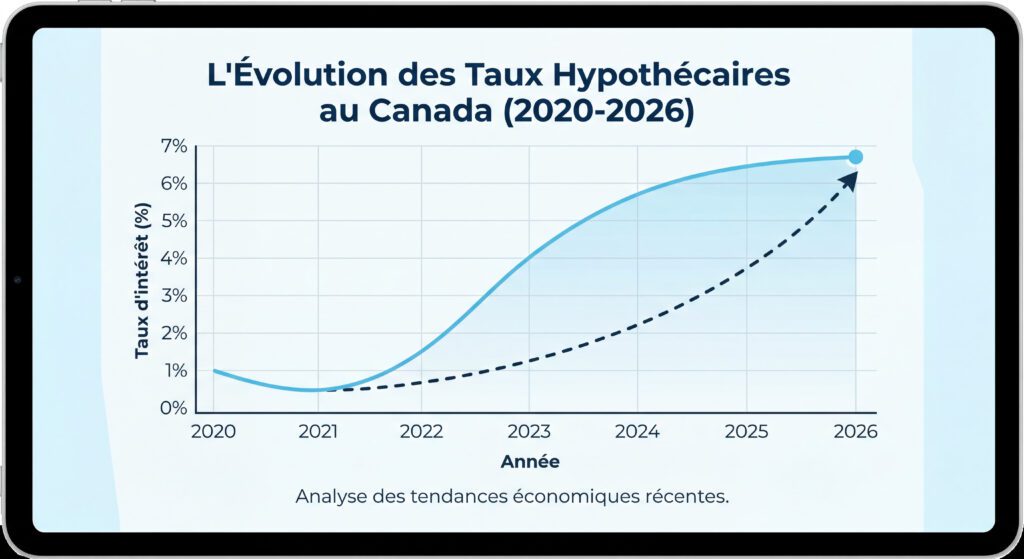
Table of contents
- The current mortgage rate situation in Canada
- Expert forecasts for 2026
- The impact on mortgage renewals
- Strategies to navigate this environment
The current mortgage rate situation in Canada
As of January 2026, the Canadian mortgage market is going through a stabilization phase after several years of volatility. The Bank of Canada is maintaining its policy rate at 2.25%, a level considered neutral by most economists. While this stability may appear reassuring on the surface, it masks a more complex reality for homeowners.
According to the most recent data, Canadian inflation reached 2.4% in December 2025, slightly above the Bank of Canada’s 2% target. This situation is prompting financial institutions to adopt a cautious approach regarding potential future rate cuts.
| Rate type | Current average rate | Change vs. 2024 |
|---|---|---|
| 5-year fixed rate | 4.79% – 5.29% | +0.5% to +1% |
| Variable rate | 5.45% – 5.95% | Stable |
| BoC policy rate | 2.25% | -1.5% |
What is influencing mortgage rates in 2026?
Several economic and geopolitical factors are shaping the interest rate landscape this year:
- The USMCA review scheduled for July 2026, creating trade uncertainty that could influence Bank of Canada decisions
- Persistent inflation hovering between 2.2% and 2.4%, limiting room for further rate cuts
- Pent-up demand in the housing market maintaining upward pressure on home prices
- Immigration policies that continue to fuel housing demand
2.4% in December 2025 – Canadian inflation rate
At Hypotheques.ca, our mortgage brokers see the impact of these factors on client financing decisions every day. The key lies in proactive planning and a thorough understanding of available options.
Expert forecasts for 2026
Mortgage rate forecasts for 2026 point toward a scenario of relative stability, with few major moves expected from the Bank of Canada.
Consensus among major financial institutions
According to analyses from Canada’s leading banks:
- Scotiabank: forecasts a possible policy rate increase starting in July 2026, reaching 2.75% by year-end
- National Bank: also anticipates a gradual increase
- CIBC: expects the policy rate to remain at 2.25% through the end of 2026
- Deloitte: projects slower economic growth of 1.5%, which could limit aggressive rate hikes
“We continue to expect no change in the Bank of Canada’s policy rate throughout 2026.”
— Morningstar Canada
Possible mortgage rate scenarios
| Scenario | Probability | Expected 5-year fixed rate | Impact on homeowners |
|---|---|---|---|
| Stability | 60% | 4.5% – 5.5% | Moderate: 15–20% payment increase at renewal |
| Moderate increase | 30% | 5.0% – 6.0% | Significant: 25–30% payment increase |
| Unexpected decrease | 10% | 4.0% – 4.5% | Positive: limited increase of 10–15% |
The evolution of the Canadian housing market
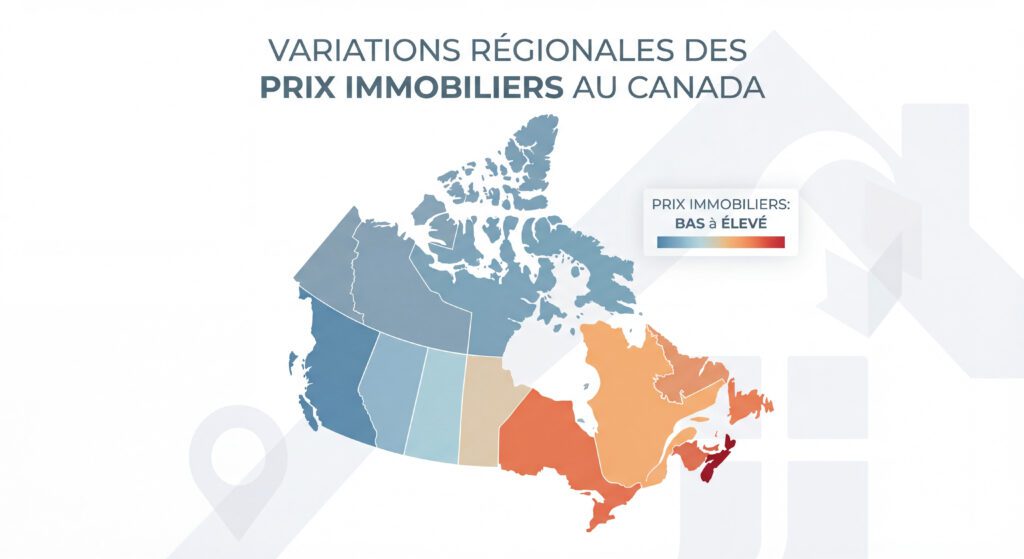
According to the Canadian Real Estate Association (CREA), the housing market in 2026 should experience moderate sales growth and relative price stagnation nationally. However, significant regional disparities remain:
- Quebec: expected 7% increase in median price to $485,138, with a 17% surge for single-family homes in Quebec City
- Ontario: 5.2% decline observed in November 2025, with an average price of $757,000
- Greater Toronto Area: average price of $1,039,458, down 6% year over year
$485,138 in 2026 – Median home price in Quebec
To receive a personalized assessment of your situation and explore the best financing options available, contact our mortgage brokers today.
The impact on mortgage renewals
This is where the picture becomes concerning for many Canadian homeowners. The year 2026 marks the great mortgage renewal shock, particularly for those who took out five-year fixed-rate mortgages between 2021 and 2022, during the period of historically low rates.
The numbers that hurt
The Bank of Canada estimates that payments for fixed-rate borrowers could increase by an average of 15% to 20% compared to December 2024. In Quebec, where more than 85% of mortgages are locked into five-year fixed rates (versus 75% in the rest of Canada), the impact will be especially pronounced.
Here is a concrete example: a $400,000 mortgage moving from a rate of 2.04% to 4.5% represents an increase of nearly $600 per month, or $7,200 more per year.
| Mortgage amount | Old rate (2021) | New rate (2026) | Monthly increase |
|---|---|---|---|
| $300,000 | 2.0% | 4.5% | ~$450 |
| $400,000 | 2.0% | 4.5% | ~$600 |
| $500,000 | 2.0% | 4.5% | ~$750 |
Homeowner adaptation strategies
Faced with this reality, many homeowners are adopting sometimes risky strategies:
- Refinancing with debt consolidation
- Extending amortization periods from 25 to 30 years
- Rate negotiation by leveraging competition among lenders
According to interviewed mortgage brokers, most clients have prepared for this transition. “People are not putting a for-sale sign on their lawn because of an extra $400 per month,” explained a broker quoted by the Journal de Montréal.
85% – Share of fixed-rate mortgages in Quebec
This is precisely where the guidance of a professional mortgage broker becomes crucial. At Hypotheques.ca, we analyze your overall situation to find the optimal solution that minimizes the impact on your household budget.
Strategies to navigate this environment
Given the challenges of the 2026 mortgage market, proper preparation and informed decisions can make all the difference. Here are the strategies recommended by industry experts.
1. Anticipate your renewal
Do not wait until the last minute. Most lenders allow renewals up to 120 days before maturity, giving you valuable time to compare offers, negotiate terms, and consult an independent mortgage broker.
2. Evaluate all financing options
| Option | Advantages | Disadvantages | Best for |
|---|---|---|---|
| 5-year fixed rate | Stability, predictability | Generally higher rate | Security-focused borrowers |
| Variable rate | Potential savings if rates fall | Uncertainty, rate increase risk | Risk-tolerant borrowers |
| Short-term fixed (1–3 years) | Flexibility, ability to benefit from future declines | Earlier renewal required | Those expecting rate cuts |
| Hybrid mortgage | Balanced risk and stability | More complex to manage | Diversification seekers |
3. Optimize your financial situation
Before renewing, take steps to strengthen your borrower profile:
- Improve your credit score
- Increase your down payment where possible
- Ensure your income is fully documented
- Reduce your debt ratios
4. Work with a mortgage broker
Mortgage brokers like those at Hypotheques.ca offer decisive advantages:
- Access to multiple lenders
- Market expertise
- Professional negotiation
- Personalized service
- No cost to the borrower
“Most of the clients I speak with are aware of what’s happening and have prepared to face it.”
— Mortgage broker
5. Consider strategic refinancing
In some cases, refinancing before maturity can be beneficial, particularly to consolidate high-interest debt, finance renovations, or take advantage of an exceptional offer before rates rise.
Visit our refinancing calculator to see if this option could work for you.
Frequently asked questions (FAQ)
Will mortgage rates go down in 2026?
Consensus forecasts suggest that rates should remain relatively stable in 2026, with the Bank of Canada’s policy rate held at 2.25%. Some institutions anticipate a slight increase to 2.75% by year-end. A significant decline appears unlikely due to persistent inflation around 2.4%.
What is the best strategy in 2026: fixed or variable?
The answer depends on your risk tolerance and financial situation. In 2026, a five-year fixed rate offers security and budget predictability, while variable rates may appeal to those expecting future declines, though savings potential appears limited based on current forecasts.
How should I prepare for my mortgage renewal in 2026?
Begin preparing at least six months before maturity. Improve your credit score, reduce debt, save for lump-sum payments, and contact a mortgage broker 120 days before renewal. Proactive preparation can save you thousands of dollars.
How much will my mortgage renewal cost in 2026?
If you took out a fixed-rate mortgage between 2020 and 2022 at around 2%, expect a 15% to 20% increase in monthly payments. On a $400,000 mortgage, this equates to roughly $500 to $600 more per month.
Will the Canadian housing market recover in 2026?
Forecasts indicate a gradual recovery in 2026, supported by pent-up demand and more favourable rates compared to 2023–2024. CREA expects moderate sales growth and a 2.8% increase in the national average price, with significant regional differences.
Key figures
- 2.25%: Current Bank of Canada policy rate, expected to remain stable in 2026
- 15%–20%: Average expected increase in mortgage payments at renewal
- $485,138: Forecast median home price in Quebec in 2026
- 85%: Share of fixed-rate mortgages in Quebec
Conclusion
The year 2026 marks a major turning point for Canadian homeowners, particularly those facing mortgage renewals after benefiting from historically low pandemic-era rates. While interest rate forecasts point to relative stability, the impact on monthly payments will be significant for thousands of households.
Success during this period depends on preparation, information, and professional guidance. The mortgage brokers at Hypotheques.ca are available to analyze your unique situation, compare the best market offers, and negotiate the most favourable renewal terms.
Do not wait until just weeks before your maturity date. The earlier you act, the more negotiating power and options you will have. The 2026 mortgage market demands vigilance and expertise—both of which you’ll find by working with professionals dedicated to your financial success.
Contact Hypotheques.ca today for a free evaluation of your situation and learn how to maximize your savings at your next mortgage renewal.