
The MAPA (Mise à part de l’argent) strategy to legally reduce your tax bill
MAPA: what is it?
Self-employed workers, owners of a rental building and owners of an unincorporated business can use the MAPA (Mise à part de l’argent, or “setting money aside”) strategy to reduce their tax bill. Learn the principles of MAPA and the steps to follow to take advantage of it and legally pay less to the tax authorities.
How to master the MAPA strategy
Among the tax planning tools available to Canadians is MAPA, short for “mise à part de l’argent.” What is it, and how do you use it? Everything you need to know about this tax strategy is below.
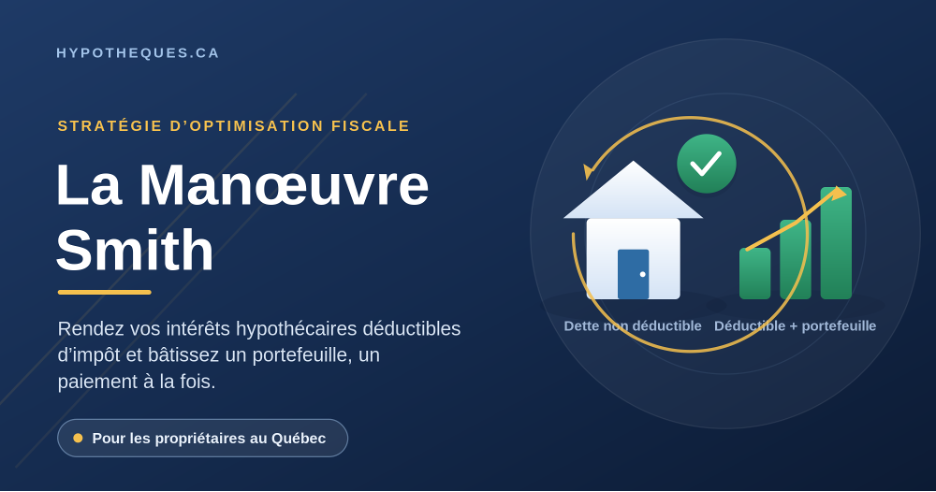
The MAPA strategy is a legal method that allows you to lower your taxes. In practice, it involves converting personal loans into business expenses. Why is that worthwhile? Because interest on personal loans is not deductible from taxable income, whereas interest on business expenses is. Finally, the legality of this technique has been recognized by the CRA (Canada Revenue Agency) since 2002, so you can use it with complete peace of mind.
MAPA: who is it for?
MAPA is designed for self-employed people and property owners. To take advantage of it, you must either:
– run an unincorporated business
– be an unincorporated self-employed worker
– own a rental building that incurs business expenses
How the MAPA strategy works
When you use the MAPA strategy, you use your rental or business income to pay off your personal loans and private expenses. Meanwhile, your business expenses are financed with borrowed money. Here’s how the conversion works in practice.
MAPA illustrated with a concrete example
Mr. Dubois is a self-employed worker whose gross annual income before expenses is $100,000. His annual business expenses total $50,000, and he still has a $100,000 mortgage on his home.
Without MAPA, Mr. Dubois cannot deduct the interest he pays on his mortgage. After putting this strategy in place, Mr. Dubois borrows to cover his $50,000 in business expenses, so he can deduct the interest paid on that loan. However, the interest on the remaining $50,000 of his mortgage cannot be deducted.
In the second year, Mr. Dubois can now deduct the interest paid on his $100,000 loan used to cover his business expenses, while the mortgage no longer exists, since it has been fully repaid with his gross annual income.
What happened?
In 24 months, Mr. Dubois converted his mortgage and its non-deductible interest into business credit whose interest is deductible. The steps are simple: you just open two separate accounts, one for income and one for expenses. All of your income goes into the “income” bank account, which is used to repay the mortgage. Meanwhile, your “expenses” account, funded by your business loan, is used to pay your business expenses.
To learn more about this method and how it could apply to your mortgage, contact us. We can answer all your questions and handle even the most complex files.